Wilderness Solo Survival: The Essential Guide
Lost in the wild alone? The critical steps for shelter, water, fire, and rescue signaling that keep you alive.
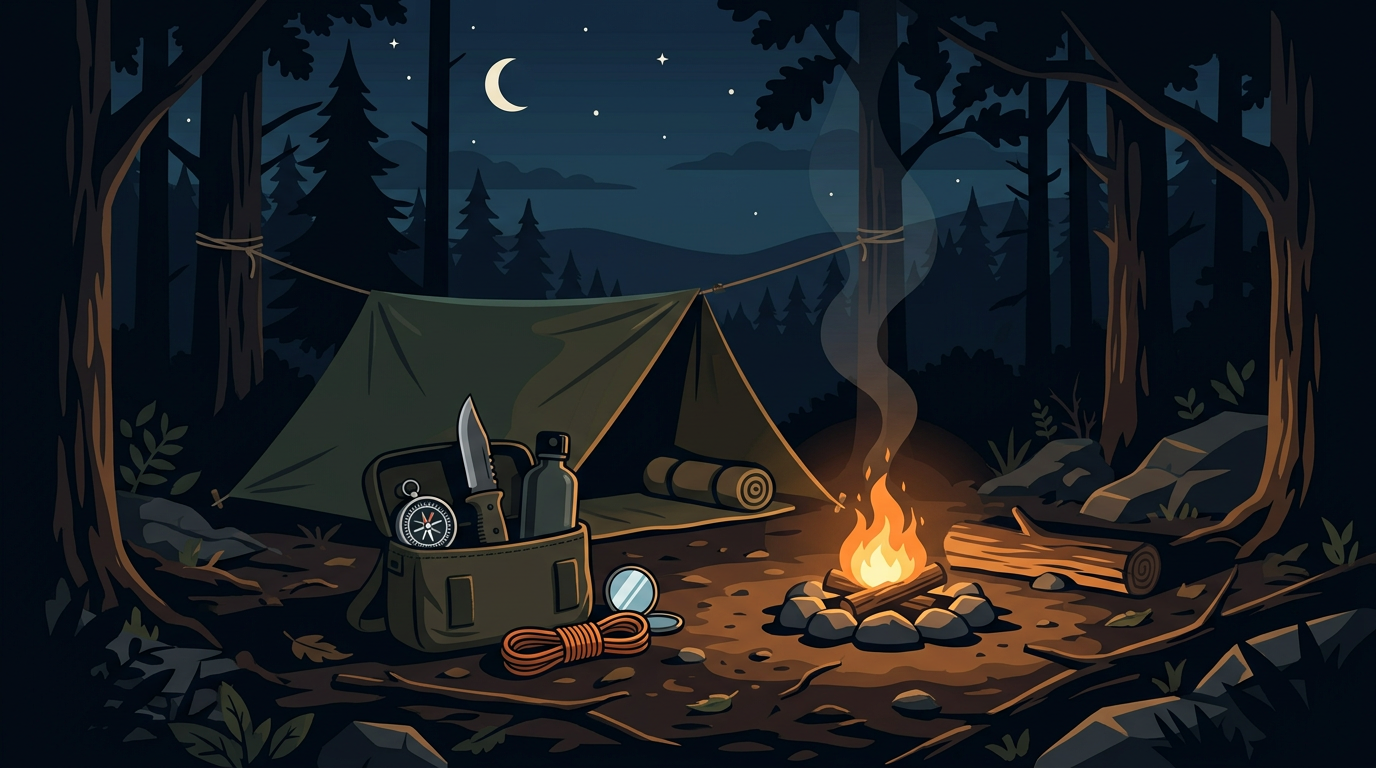
Being alone in the wilderness without supplies is one of the most challenging survival scenarios. Whether you're lost hiking, stranded after a vehicle breakdown, or separated from your group, the same fundamental principles apply.
The Survival Priority Order
In any wilderness emergency, address these priorities in order:
1. Immediate safety: Move away from any danger (falling rocks, rising water, wildlife)
2. Shelter: Exposure kills faster than dehydration or starvation
3. Water: You need water within 3 days
4. Fire: Warmth, purification, signaling, and morale
5. Food: Not critical for days, but energy helps decision-making
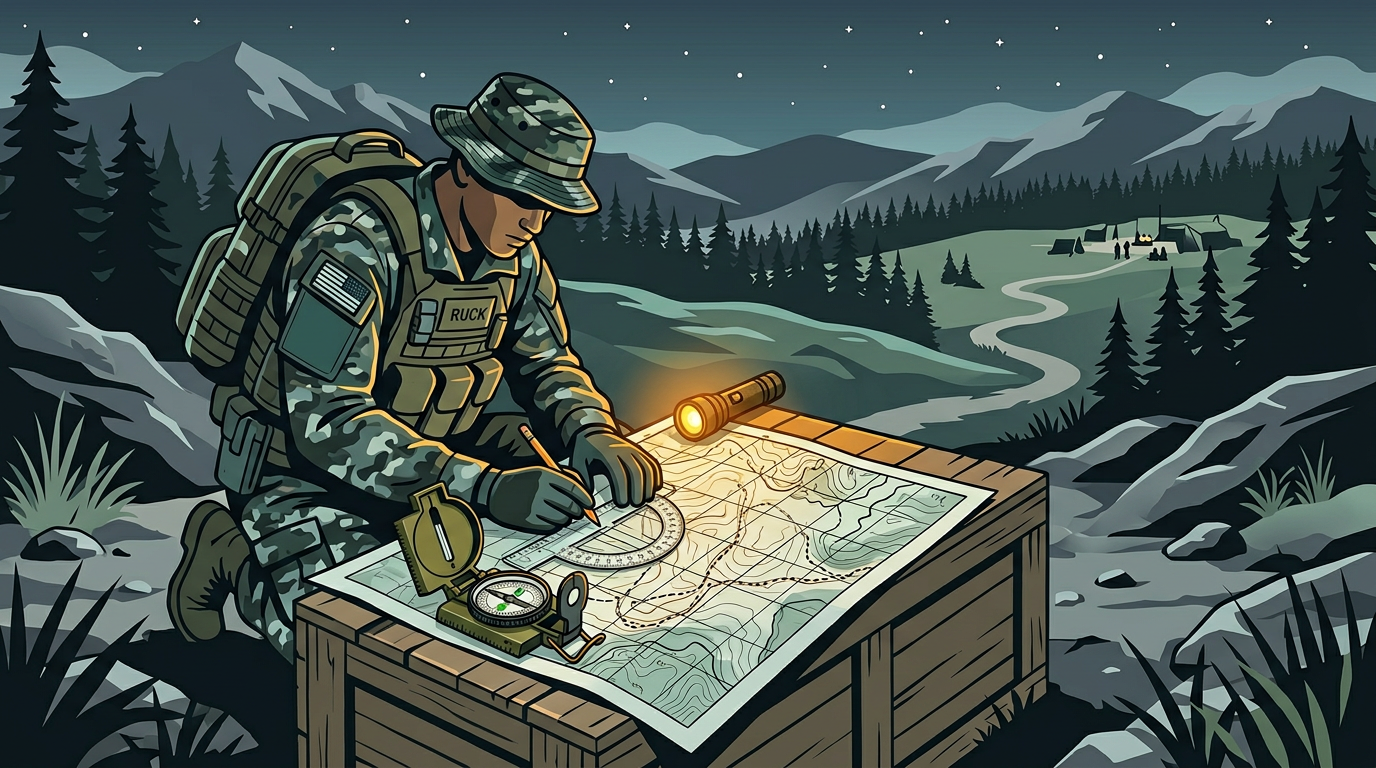
6. Rescue/Navigation: Signal for help or navigate to safety
S.T.O.P.: The First Minutes
When you realize you're in trouble, STOP:
- Sit down, resist the urge to panic-walk
- Think, assess your situation calmly
- Observe, what resources do you have? What's your environment?
- Plan, make a deliberate decision about your next action
Shelter
Exposure (hypothermia in cold, heat stroke in heat) is the #1 killer in wilderness survival. Build or find shelter immediately.
Quick shelters:
- Natural formations (rock overhangs, fallen trees, dense evergreen canopy)
- Debris hut: lean branches against a ridgepole, pile leaves/moss 2-3 feet thick
- Snow cave (in winter): dig into deep snowbank, create small entrance and raised sleeping platform
Key principles:
- Small is warm, just big enough to lie down
- Insulate from the ground (leaves, pine needles, bark)
- Block wind from the entrance
- Stay dry, moisture destroys insulation
Water
Finding and purifying water is critical. Signs of nearby water:
- Follow animal tracks and bird flight patterns (especially at dawn/dusk)
- Listen for flowing water
- Green vegetation in arid areas
- Valley bottoms and terrain depressions
- Morning dew on grass (collect with cloth, wring into container)
Always purify: boil for 1 minute, use purification tablets, or build a filter from sand/charcoal/gravel.
Fire
Fire provides warmth, water purification, cooking, rescue signaling, and psychological comfort.
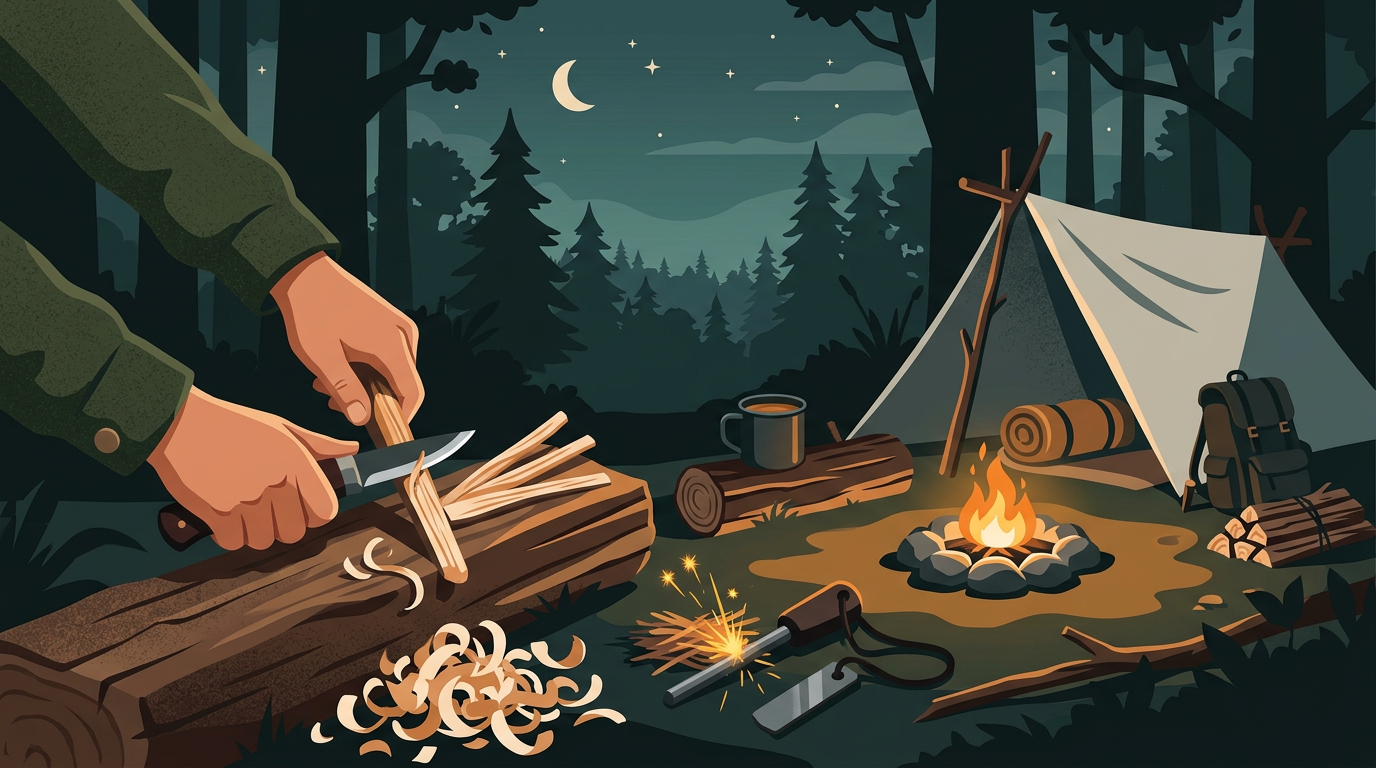
If you have matches/lighter: Protect them. Start fires carefully with dry tinder.
If you don't: Friction methods (bow drill, hand drill) require practice. A clear plastic bottle filled with water can focus sunlight like a magnifying glass. Steel wool and a battery create sparks.
Fire building:
1. Tinder: dry grass, bark shavings, cotton
2. Kindling: small dry twigs, pencil-thickness
3. Fuel: progressively larger dry wood
4. Tepee structure for starting, log cabin for sustained burning
Signaling for Rescue
Make yourself visible:
- Three of anything is the universal distress signal (3 fires, 3 rock piles, 3 whistle blows)
- Use mirrors or shiny objects to reflect sunlight toward aircraft
- Create ground-to-air signals: large X, SOS, or HELP using rocks, logs, or trenches
- Stay in open areas where you can be seen from above
HAVEN's Wilderness Scenario
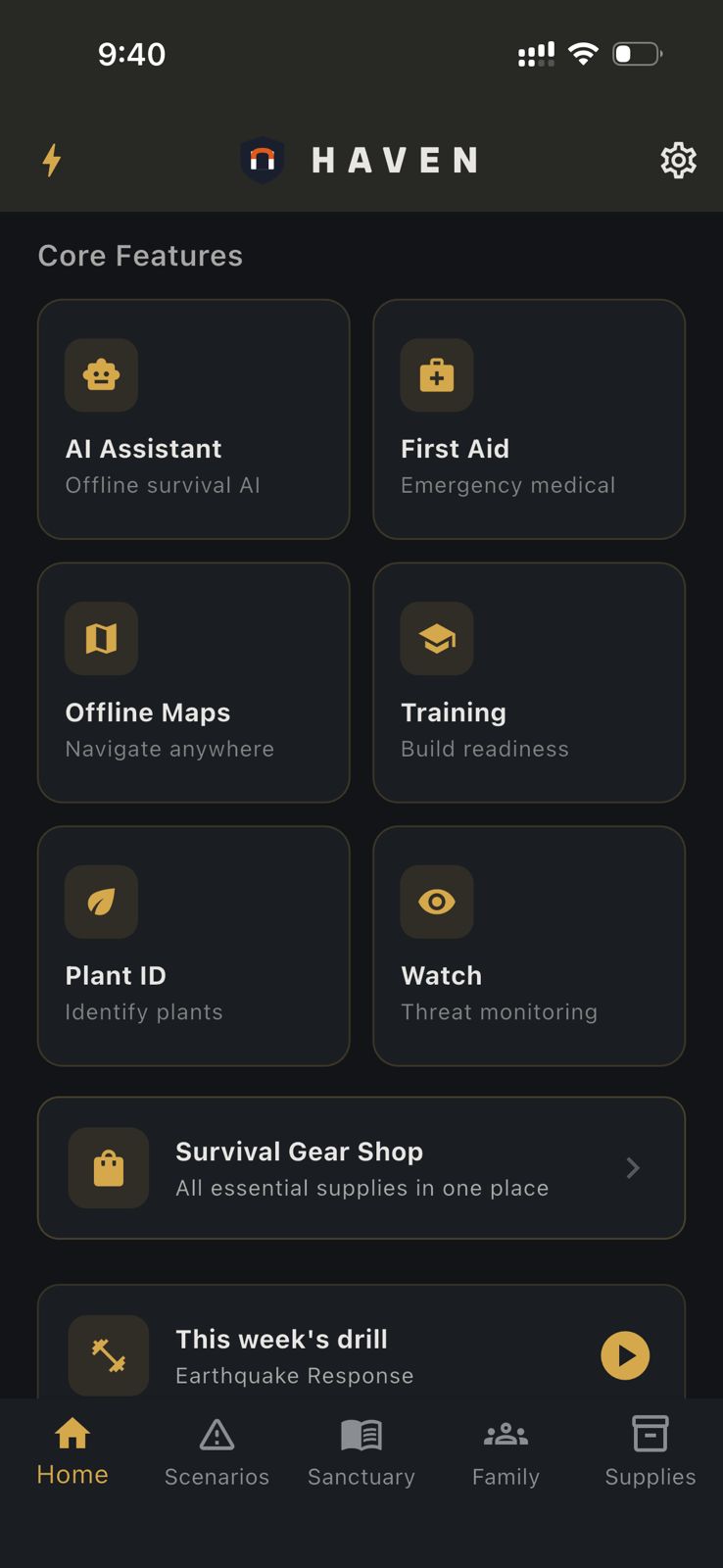
HAVEN's Wilderness Solo Survival scenario provides step-by-step guidance for each priority, shelter-building instructions, water finding techniques, fire methods, and rescue signaling protocols. The offline AI assistant can provide real-time guidance for your specific situation, climate, and available resources.
Ready to get prepared?
Download HAVEN free and start your preparedness journey today.