Earthquake Preparedness: The Ultimate Survival Guide
Essential earthquake preparedness tips to secure your home, protect your family during the shaking, and survive the critical hours following a major seismic event.

Unlike hurricanes or blizzards, earthquakes strike with zero warning. Your survival depends entirely on your earthquake preparedness before the ground starts shaking.
Here is the ultimate guide to securing your home and protecting your family during a major seismic event.
1. Secure Your Space (Before the Quake)
Most earthquake injuries aren't caused by collapsing buildings, but by falling objects.
- Anchor heavy furniture: Use nylon straps or L-brackets to secure bookcases, dressers, and water heaters to wall studs.
- Relocate heavy items: Move heavy items to lower shelves. Do not hang heavy mirrors or framed pictures directly over beds or couches.
- Secure latches: Install child-proof latches on kitchen cabinets so plates and glasses don't fly out.
2. Drop, Cover, and Hold On (During the Quake)
When the shaking starts, your instinct might be to run outside. Don't. Running during an earthquake drastically increases your chance of injury.
- DROP down onto your hands and knees. This position protects you from being knocked down and allows you to crawl to shelter.
- COVER your head and neck (and your entire body if possible) under a sturdy table or desk. If there is no shelter nearby, crawl to an interior wall (away from windows) and cover your head with your arms.
- HOLD ON to your shelter (or your head and neck) until the shaking stops. Be prepared to move with your shelter if the earthquake shifts it.
3. The Aftermath: The First 24 Hours
Once the shaking stops, the real survival test begins.
- Check for hazards: Put on sturdy shoes immediately to protect against broken glass. Check your home for structural damage, gas leaks (smell for sulfur), and electrical fires. Know how to shut off your utilities.
- Do not use elevators: If you are in an apartment building, use the stairs.
- Expect aftershocks: These secondary shockwaves can happen minutes, days, or months after the main quake, and can bring down already weakened structures.
4. Maintain Offline Information
Power grids and cell towers are notoriously fragile during earthquakes. You must have access to offline information.
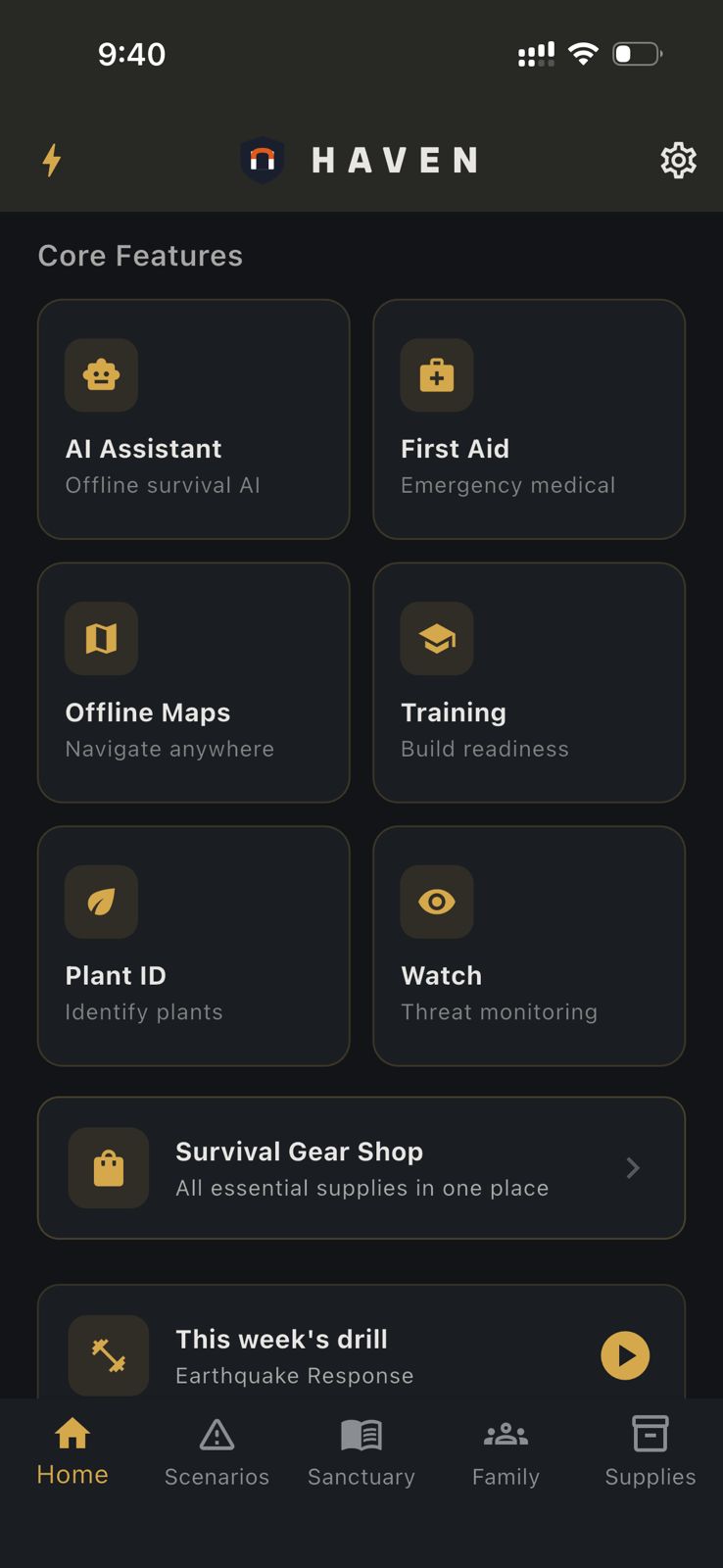
The HAVEN app provides offline maps to help you navigate around collapsed infrastructure, a built-in earthquake scenario guide, and an offline AI that can assist with triage and emergency planning when the internet is entirely inaccessible.
Ready to get prepared?
Download HAVEN free and start your preparedness journey today.