What Is a Dirty Bomb, and What Should You Do? A Calm Explainer
A CNN report about a possible dirty bomb plot, and Iran's denial, sent searches soaring. Here's what a dirty bomb actually is, why it is very different from a nuclear bomb, and the three steps officials recommend if one is ever used.
"Dirty bomb" became one of the most searched phrases in the US and Canada this week. On November 16, CNN reported, citing unnamed US officials, that intelligence showed Iran had weighed a dirty bomb or chemical weapon against officials in Washington. Iran's Foreign Ministry called the report "baseless."
Quick answer: A dirty bomb is ordinary explosives mixed with radioactive material. It is not a nuclear bomb: it can't cause a nuclear blast, and most of the harm comes from the explosion itself. If one is ever used near you, officials give three steps: get inside, stay inside, stay tuned. On the current report, the White House said "at this time there are no credible threats to the homeland."
What the report actually said
- CNN's sources said Iran had weighed the option, but described it as planning to give Tehran options, not an imminent attack, and said there was no evidence Iran had decided to go ahead.
- US officials disagreed about whether Iran has the people and capability to carry it out.
- Iran denied it, calling the allegations baseless.
- The White House said there are no credible threats to the homeland at this time.
In short, there is no warning to the public, and nothing you need to do today except know the basics.
What a dirty bomb is, and isn't
Swipe sideways to compare columns
| Dirty bomb | Nuclear bomb | |
|---|---|---|
| What it is | Regular explosives plus radioactive material | A nuclear chain reaction |
| Blast | Like any conventional bomb, a few blocks at most | Can destroy a city |
| Radiation | Spread over a limited area, usually low doses | Intense radiation and widespread fallout |
| Main danger | The explosion, then panic | The blast, heat and fallout |
Officials call it a "weapon of mass disruption": the goal is fear, cleanup costs and closed streets, more than casualties from radiation.
What to do if a dirty bomb goes off near you
1. Get inside. Go into the nearest solid building, ideally brick or concrete. Head to a basement or the middle of the building, away from doors and windows. If you were outside near the blast, take off your outer layer of clothing and put it in a plastic bag. That removes most radioactive dust. Wash your hands, face and hair if you can.
2. Stay inside. Close doors and windows and turn off fans and heating or air systems that pull in outside air. Plan to stay put until officials say it's safe, often for hours, not days. Don't go out to pick up children: schools have their own plans and will shelter them.
3. Stay tuned. Follow official sources such as local emergency management, your Wireless Emergency Alerts, and TV or a battery radio. Officials will tell you whether to stay, where to go, and whether you need to be checked.
Help the injured first. If someone near you is hurt by the blast, treat life-threatening injuries such as heavy bleeding right away. Radiation from a dirty bomb is rarely an immediate threat to life, and injuries from the blast are.
Don't take potassium iodide unless officials tell you to. It only protects the thyroid from one kind of radioactive iodine, which may not be involved at all.
What you can do today
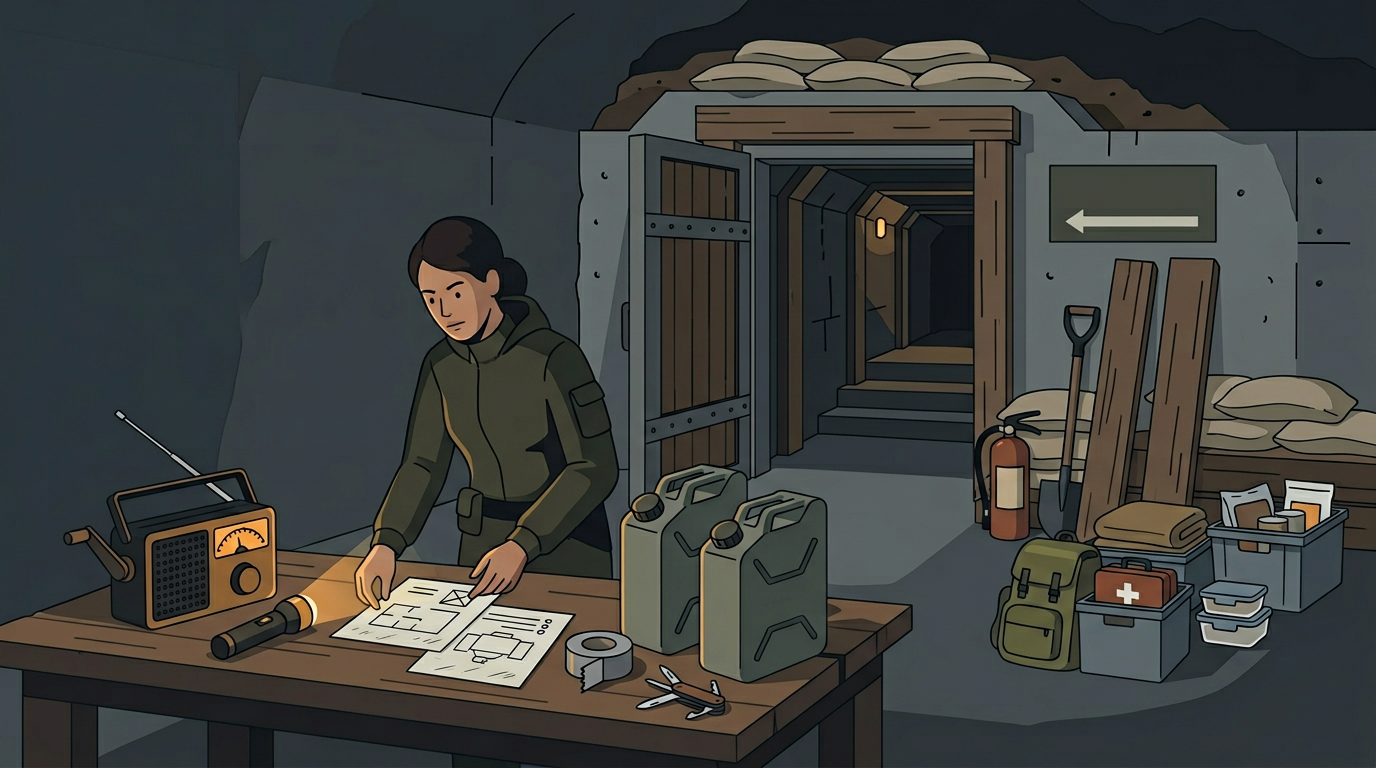
You don't need special gear. The same basics that help in a storm or power outage cover this too:
- A 3-day kit: water, food that needs no cooking, medicine, a flashlight, a power bank and a battery radio.
- A family plan: where everyone will shelter, and how you'll reach each other if phones are overloaded. See how to text without service.
- Know your school and work plans: most have shelter-in-place procedures.
- Learn basic first aid, especially how to stop bleeding.
For the broader picture, our nuclear preparedness guide covers how a dirty bomb differs from a nuclear attack, and our November 17 fact check explains this week's emergency alert test.
How HAVEN helps
- Works with no signal. Shelter-in-place steps, first aid and offline maps are stored on your phone.
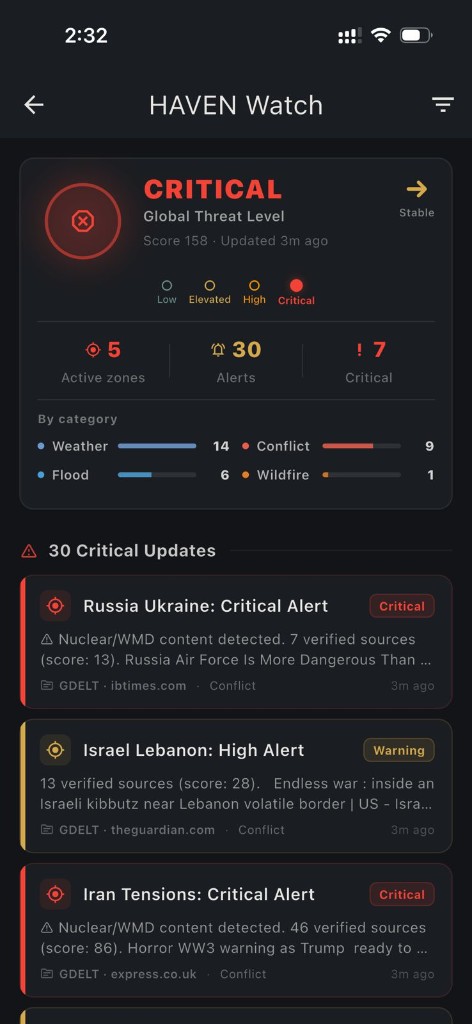
- HAVEN Watch. Follows official alert sources and tells you about real events where you and your family are, not rumors.
- Messaging without the network. Nearby family phones can text over Bluetooth when cell networks are overloaded.
Download HAVEN free and set it up on every phone in your house.
FAQ
Q: What is a dirty bomb?
A: A dirty bomb, or radiological dispersal device, is a conventional explosive combined with radioactive material. It spreads radioactive dust over a limited area. It cannot cause a nuclear explosion.
Q: Is a dirty bomb the same as a nuclear bomb?
A: No. A nuclear bomb uses a nuclear chain reaction and can destroy a city. A dirty bomb is a regular bomb with radioactive material added. Most of the harm comes from the explosion itself.
Q: What should I do if a dirty bomb goes off?
A: Get inside a solid building, stay inside with doors and windows closed, and stay tuned to official alerts and local news. If you were outside nearby, remove your outer clothing and wash exposed skin and hair.
Q: Is there a dirty bomb threat in the US right now?
A: A CNN report said US officials had intelligence that Iran weighed the option, and Iran denied it. The White House said there were no credible threats to the homeland at this time, and no public warning has been issued.
Ready to get prepared?
Carry on-device AI advice, offline topographic maps, and 12 printable field manuals on your phone with zero cell signal needed.